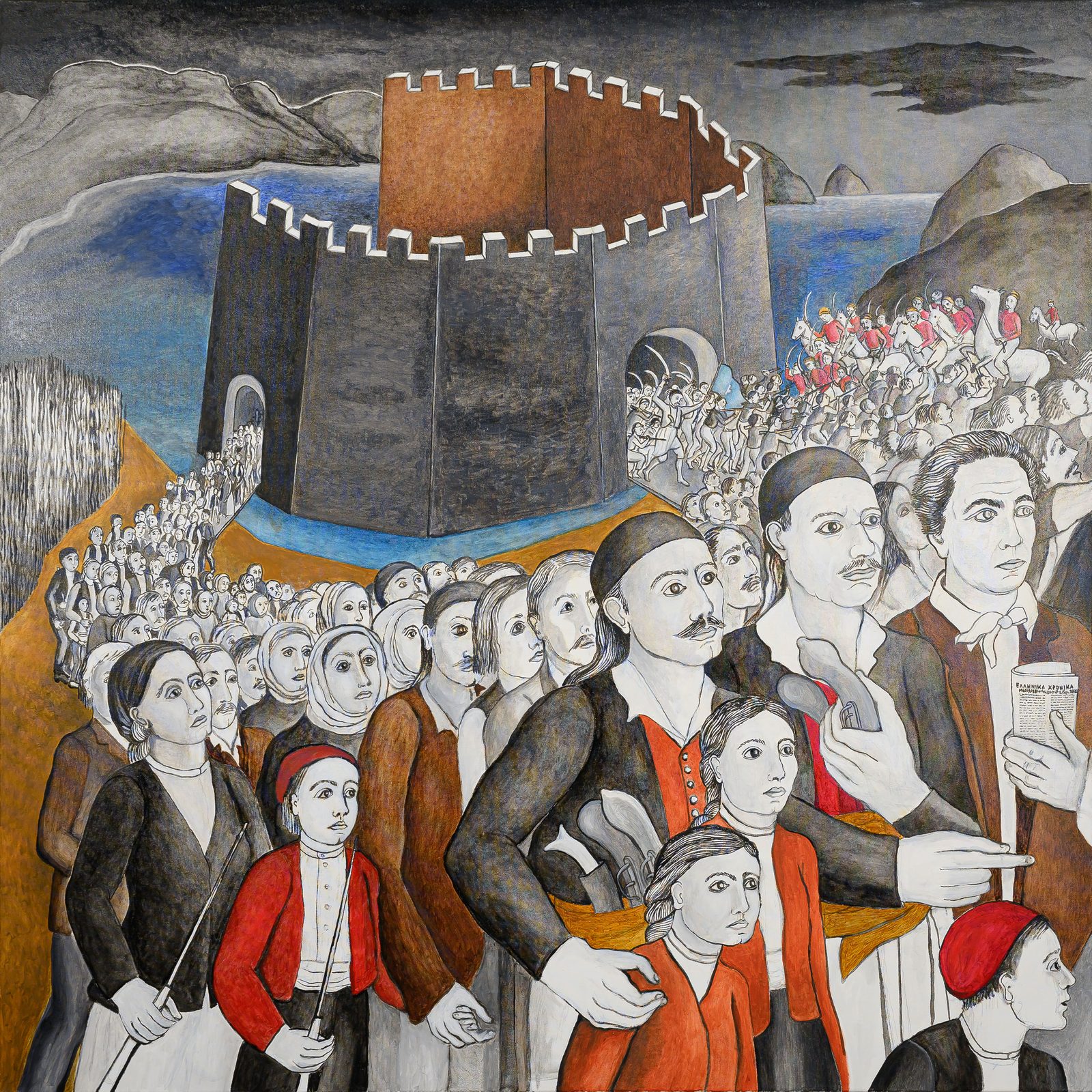
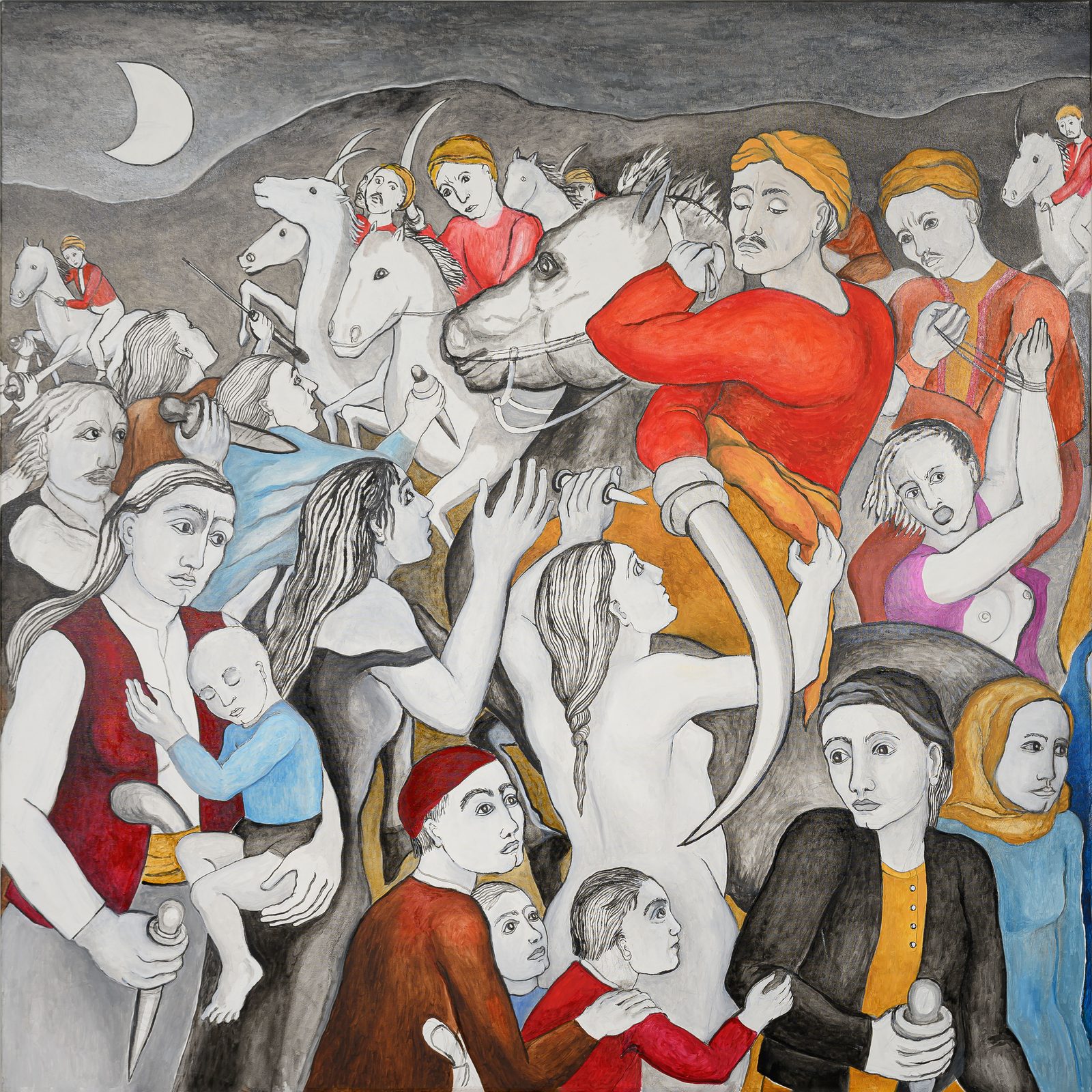
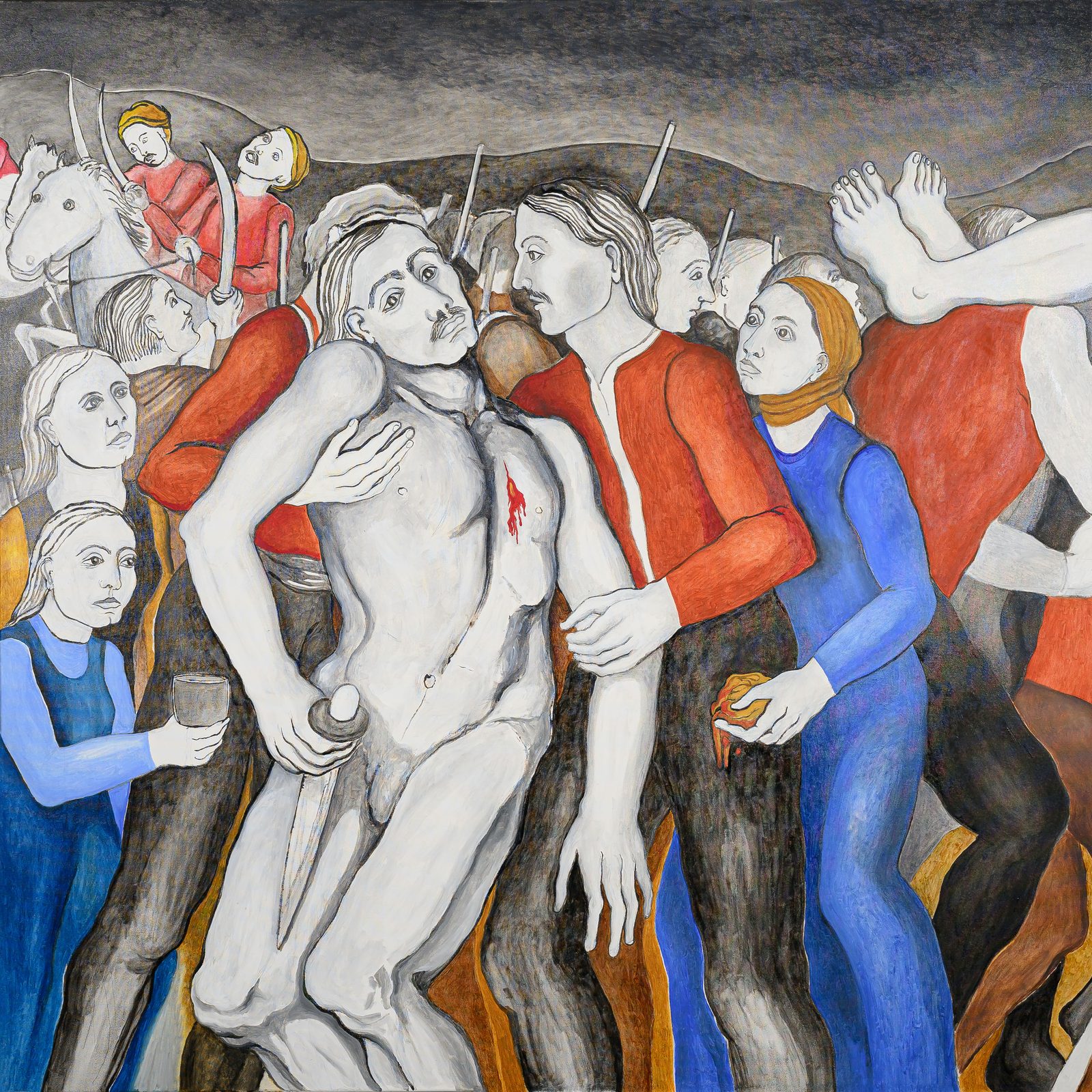
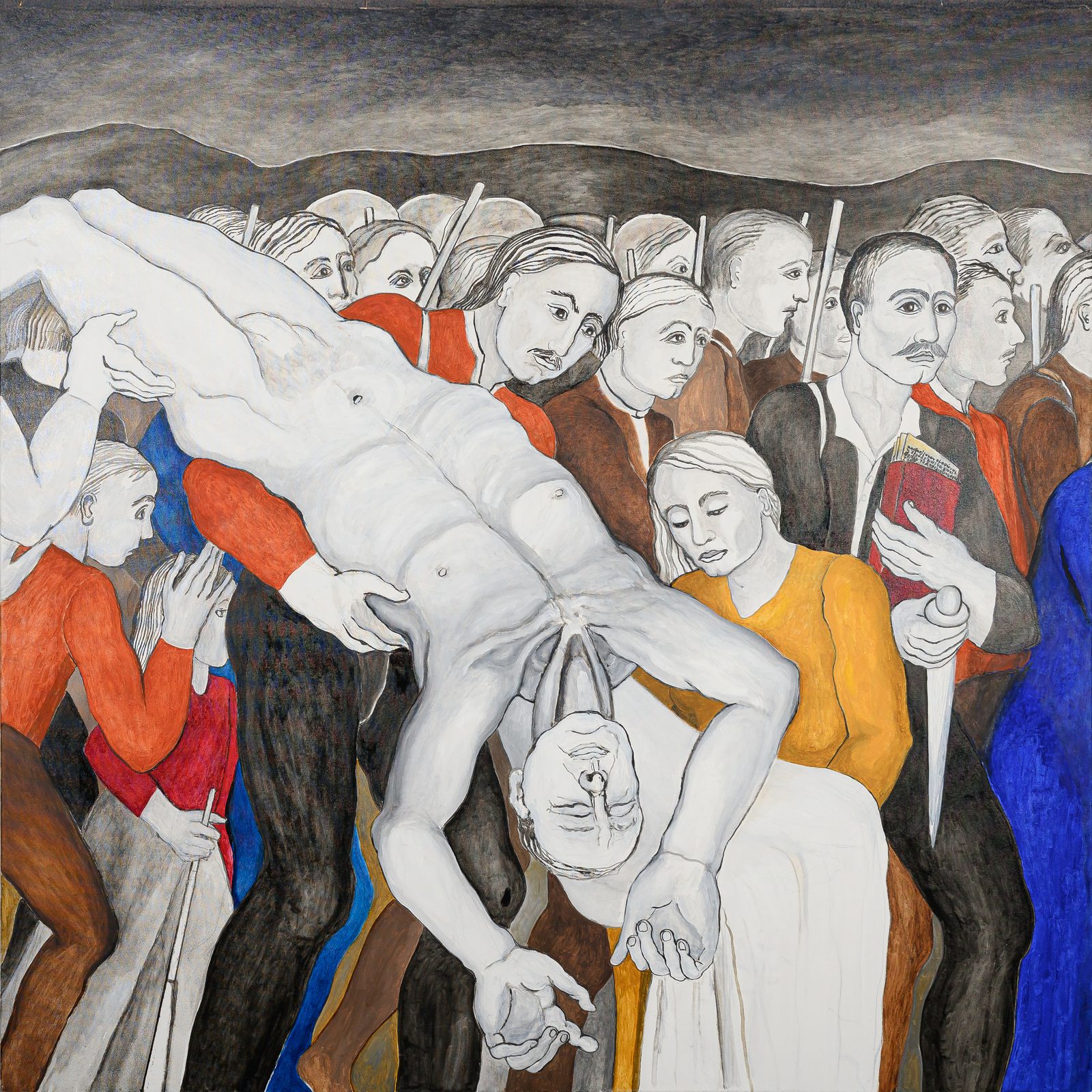
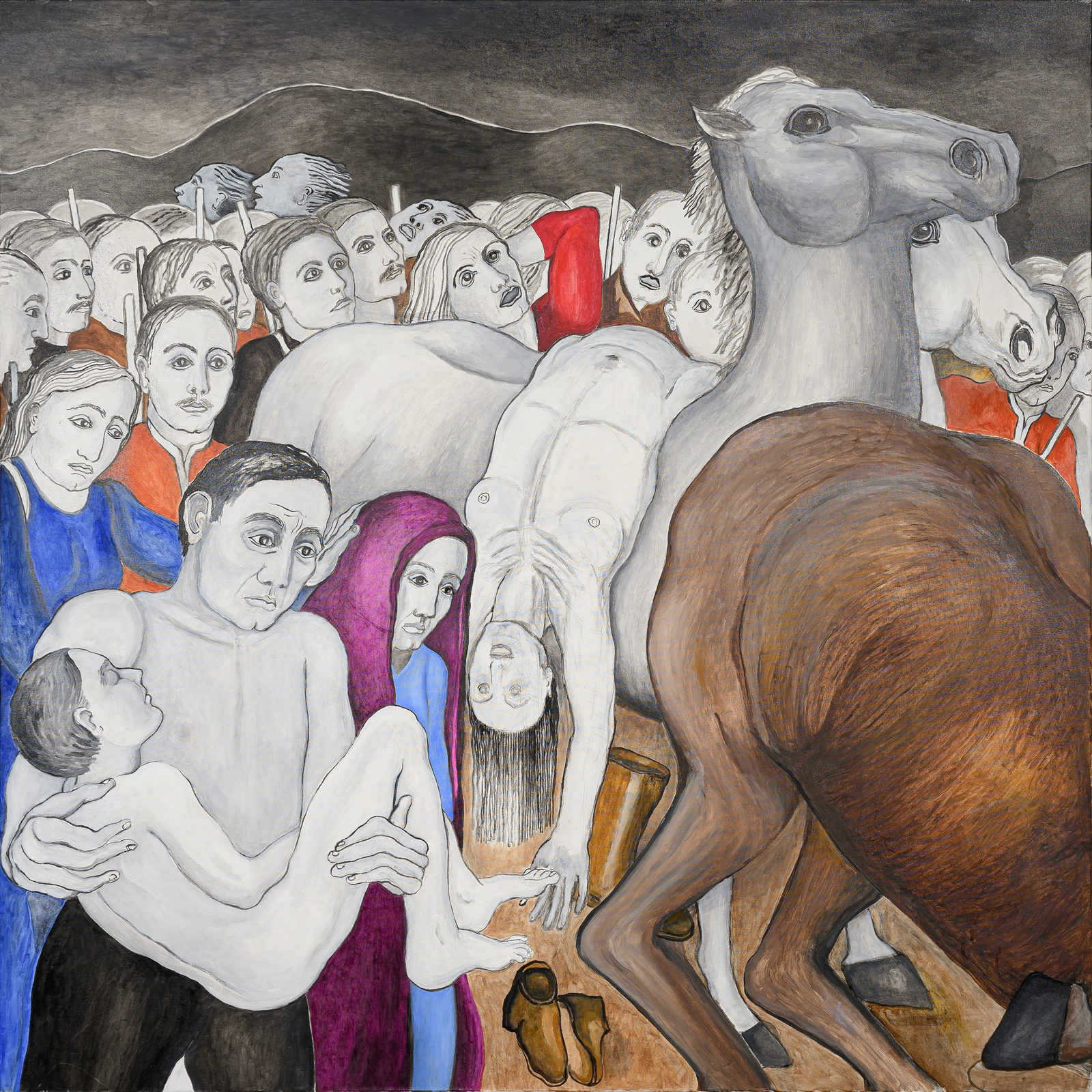
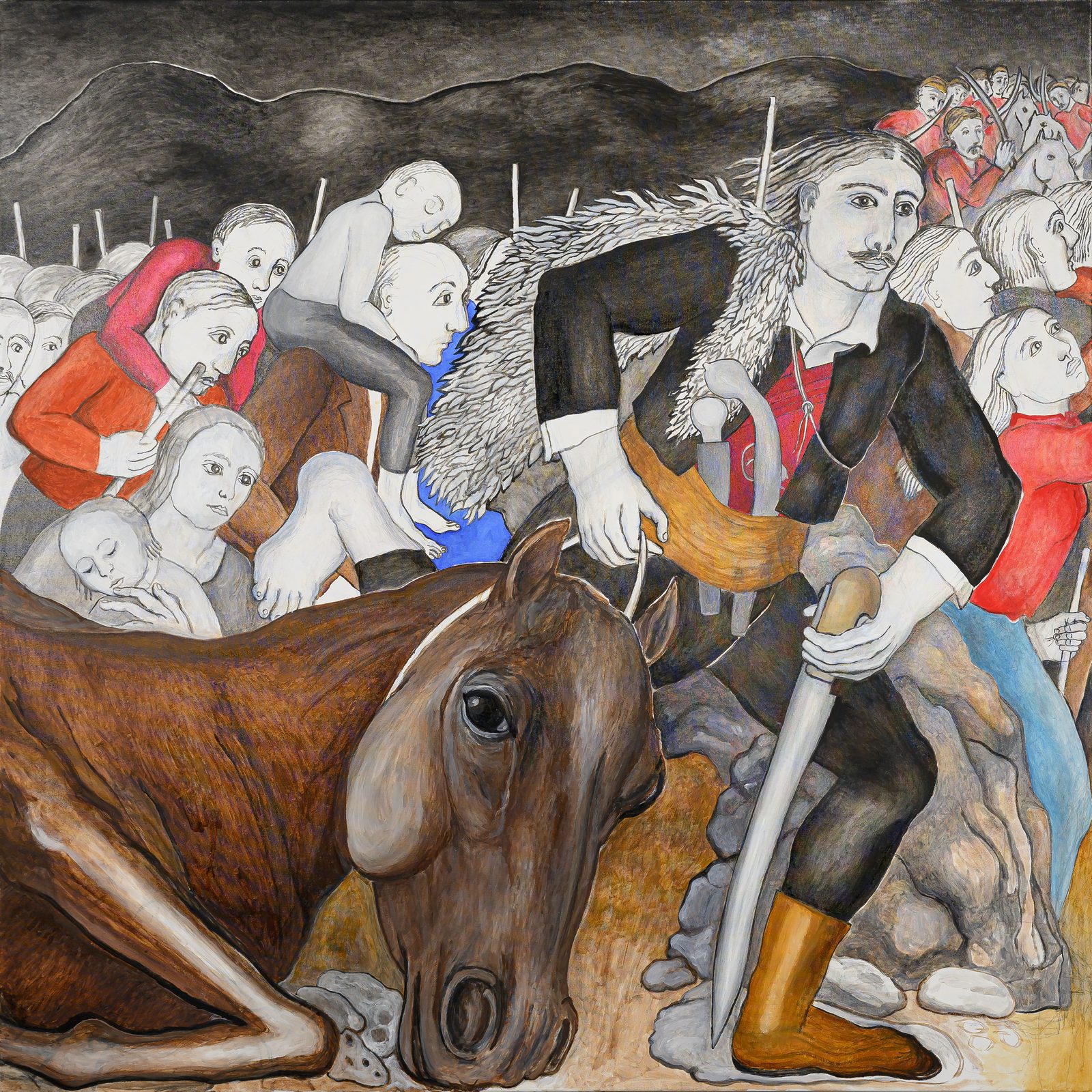
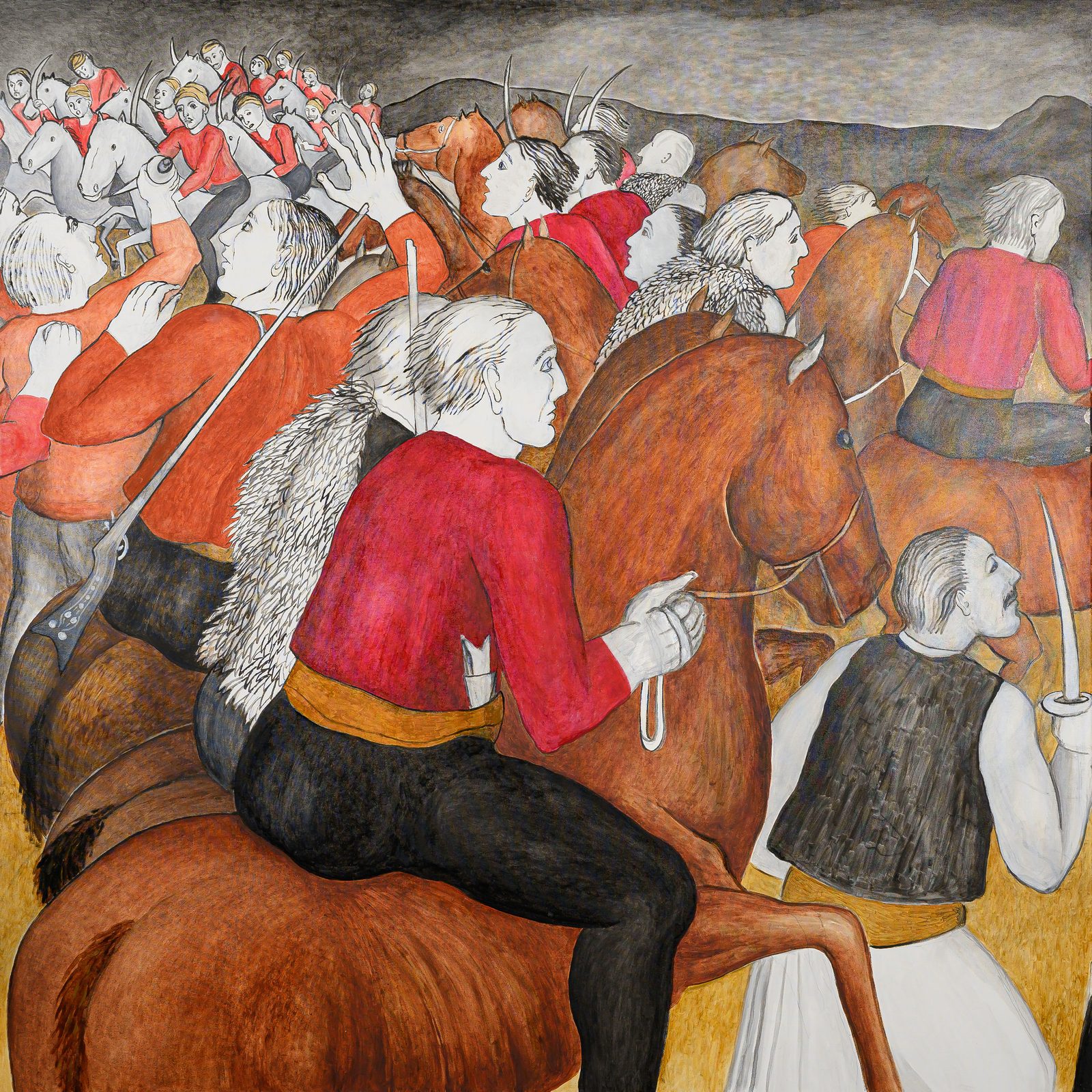
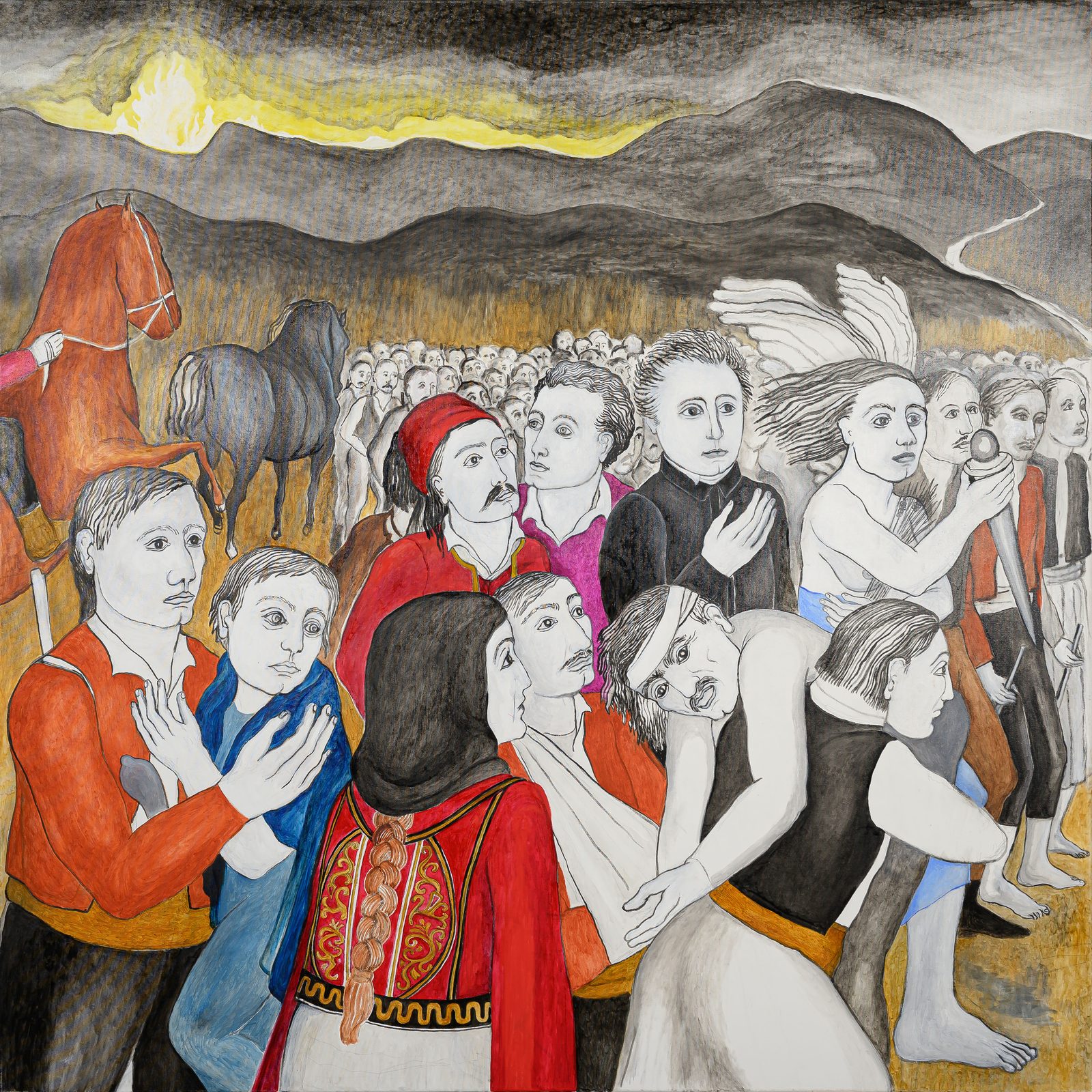
“Exodus and March of the Besieged”, frieze, painting, 2026
The painting “Exodus and March of the Besieged”, is dedicated to the Exodus of Missolonghi, on 10th April 1826, and to the March of the besieged inhabitants from the walls of the sacred city up to the hill where the survivors gathered. The painting ensemble, measuring eight metres in length, takes the form of a frieze and it is created in oil on canvas across eight adjoined panels, each measuring 100 X 100 cm. It was painted over a period of two years, from late 2024 until the autumn of 2026.
The conception of this painting has two starting points. The first is the Panathenaic Procession depicted on the Parthenon frieze, with its constant flow from the left to right and the steady forward motion of human figures and horses, all moving in the same direction towards a common goal. The second is Guernica and the dramatic imprint of the horrors of war upon human faces and bodies, men, women, and children, as well as upon animals.
The unfolding sequence of images in the painting draws extensively on Nikolaos Kasomoulis’s “Military Memoirs 1821 – 1833”, particularly the pages following his account of the Siege of Missolonghi, in which he describes the Exodus and the march towards Mount Zygos. The painted narrative begins at the moment when the besieged inhabitants emerge from the Castle in three columns leaving behind this “little threshing floor” that Dionysios Solomos praises with such admiration, gratitude and love in The Free Besieged.